Wear Tests
How Long Does Liquid Lipstick Really Last Through a Meal?
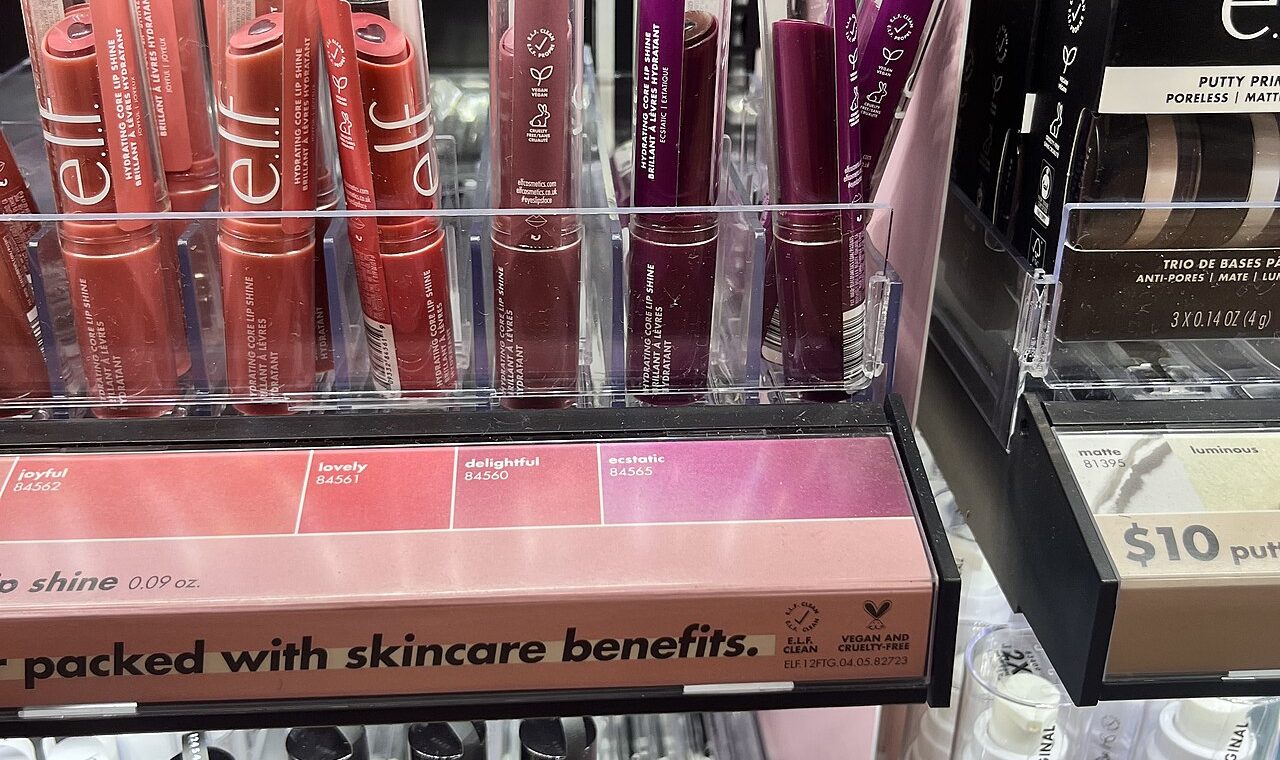
Does liquid lipstick survive a meal, or does it only survive the photograph before the meal?
Brands claim eight hours, twelve hours, even sixteen, and none of those numbers include a plate of pasta.
I timed six liquid lipsticks through three meals each, photographing at every stage.
The range was enormous, and price predicted almost nothing.
What predicted everything was the finish and the way the film formed.
Here is what the numbers actually looked like.
How I measured
Each lipstick went on at nine in the morning on bare, prepped lips with no liner.
I photographed at one hour, before lunch, immediately after lunch, and at five in the afternoon.
Lunch was the same meal each time: something oily, something hot and a drink.
I scored each stage on coverage, edge definition and evenness rather than on how it felt.
A lipstick that felt fine but had gone patchy scored badly, because the photograph is the thing you live with.
Three repeats per product, because one day is not a test.
The numbers, roughly
The best performer held full coverage for six hours and looked presentable at nine, with a worn centre.
The worst was gone from the centre within ninety minutes and needed a full reapplication after lunch.
The average across the six was about three hours of intact wear and five hours of visible colour.
None of them survived a meal without some loss.
The loss was always in the same place: the inner third of the lower lip.
That pattern was consistent enough to be a rule.
Every claim of all-day wear is a claim about colour, not about coverage.
Why the centre fails first
The inner lip is wet all day and it is the part that touches food, cups and teeth.
Film-forming polymers need a dry surface to grip, and the inner lip is never dry.
So the film never fully forms there, and it lifts at the first contact.
Once a gap opens in the centre, the surrounding colour looks patchy by comparison.
This is why people describe a lipstick as having failed when only ten percent of it has moved.
The visual effect is larger than the physical loss.
Understanding that changes how you reapply.
The oil problem
Oil dissolves the film faster than water does, which is why a salad with dressing is worse than a glass of water.
Butter, cheese and anything fried will lift colour from the centre within minutes.
A dry meal does far less damage, which is why the same lipstick can survive a sandwich and fail at dinner.
If you know the meal, you can predict the damage.
This is not a product failure; it is chemistry doing what chemistry does.
The practical answer is to eat differently before an event, or reapply after.
Nobody wants to hear it and it is still true.
The blotting question
A liquid lipstick blotted once after application loses shine and gains wear time.
In my test, one blot added roughly forty minutes to intact coverage.
Two blots added about an hour but made the finish completely matte.
If you like the finish as applied, the extra wear may not be worth it.
If you want maximum durability, blot and skip the gloss.
This is the cheapest performance upgrade available.
It costs one tissue.
Liner underneath
A traditional pencil liner across the whole lip before the liquid added about ninety minutes in my notes.
It also changed the failure mode from a patch to a gradual thinning, which looks far better.
The liner has to be dry; a creamy one makes the liquid slide.
And it has to be close in colour, or the worn centre reads as a different shade.
For a meal-heavy day, this is the single best preparation step.
It is also the step most people skip because it takes forty seconds.
Forty seconds for ninety minutes is a good trade.
Reapplication without ruining it
Do not apply a new layer over a patchy one; the new product grips the edges and slides off the middle.
Blot the loose colour away first, then apply one thin layer to the centre only.
If you have a liner, run it around the inner edge before the liquid.
This takes twenty seconds and restores most of the original look.
Applying the full lip again builds up product that will flake by evening.
Thin layers always beat thick ones over time.
Your lips also stay more comfortable, which matters by hour six.
Comfort versus durability
The most durable formulas in my test were also the most drying.
The most comfortable ones lasted the shortest time.
That trade-off appears unavoidable in this category.
If you wear a liquid lipstick daily, plan on a balm at night and accept some dryness during the day.
If comfort matters more, choose a satin bullet and reapply after lunch.
There is no formula that is both weightless and indestructible.
Anyone who tells you otherwise is selling something.
The transfer test nobody does
Press a tissue to your lip ten minutes after application.
If colour comes off, more will come off on a cup, a collar or a napkin.
A formula that passes this test will survive a meal far better than one that fails it.
It takes ten seconds and predicts the whole day.
Do it in the shop with a tester, and you will know before you buy.
This is the most useful pre-purchase test in the category.
It has saved me from at least four disappointing tubes.
Price and performance
The most expensive product in the test ranked fourth.
The cheapest ranked second.
Price bought better packaging and a nicer applicator, not more hours.
What mattered was the polymer load, which has nothing to do with the price point.
Mid-range products performed inconsistently in both directions.
If you are buying for durability, read reviews that mention meals rather than reviews that mention the colour.
Durability is a formula property that gets discussed least.
What about the sixteen hour claims
Those claims are measured on skin with no eating, drinking or talking.
They are technically true and practically useless.
A useful claim would be something like four hours with one meal, which is roughly what the best products deliver.
Ignore the number and look at the finish on the model’s mouth in the marketing photograph.
If the centre looks thinner than the edges, that is the honest version.
Marketing photographs are more informative than the copy underneath them.
Read the picture, not the claim.
Long days and practical planning
For a wedding, use a liner, one thin layer, one blot, and carry the tube.
For a workday, a satin bullet reapplied at lunch is less trouble than maintaining a liquid.
For a flight, a stain plus a balm is the only thing that survives the air conditioning.
Match the product to the day rather than committing to one format.
That is what a makeup bag with three options is for.
None of them is universally best.
All of them are better than guessing.
Drinks are worse than food
A hot drink is the fastest way to destroy a lip film, and it is faster than a meal.
The heat softens the polymer and the cup rim removes it in a single line.
Coffee removes a crescent from the lower lip, which is exactly the area that was already weakest.
A cold drink through a straw removes almost nothing, because there is no contact with the lip.
This is why people who drink iced coffee all day keep their colour and people who drink tea do not.
If you want the honest version of a wear claim, watch how the person making it drinks.
Nobody tests a lipstick against four cups of tea, which is what most office days actually are.
What the best performers had in common
All three of the top performers had a thin, watery texture rather than a thick mousse.
They also dried down fully within ninety seconds, which the weakest ones did not.
And they had a slight tackiness after drying, which helps the second layer grip.
Thick formulas felt better on application and failed earlier, because a thick layer lifts as a slab.
Thin formulas look cheap in the tube and behave better on the lip.
That inversion explains why so many expensive products underperform in tests like this one.
Texture predicts wear better than price, packaging or the claim on the box.
What does your own lipstick do at lunch?
Photograph your lip before and after your next meal and compare with the numbers above.
If your product lost the centre within an hour, a liner will change your whole relationship with it.
Which one in your drawer deserves a second chance with a liner underneath?