Wear Tests
Why Does Lipstick Fade From the Centre First?
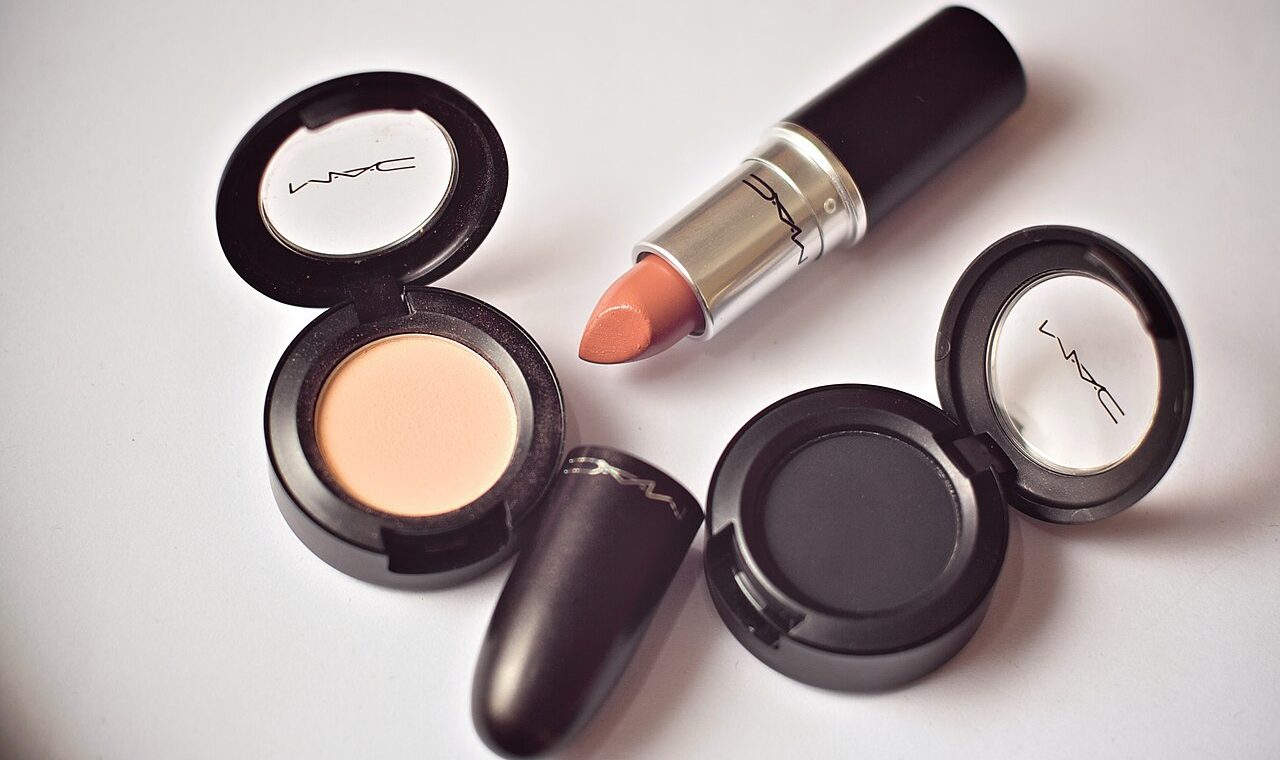
Have you noticed that lipstick never wears evenly, and the middle of your mouth is always the first to go?
It happens to almost every formula and almost every person, which suggests a structural cause rather than a bad product.
I photographed forty applications over a month, at three stages each, and the pattern never varied.
Once you understand why the centre fails, the fixes become obvious and cheap.
Here is the mechanism, and the four things that actually change it.
None of them involves buying a more expensive lipstick.
The anatomy of the inner lip
The inner third of the lower lip is not the same tissue as the rest of the lip.
It has no keratinised surface, no pigment and no oil glands.
It stays wet from saliva all day, which is why it never fully dries.
Any coating applied there is sitting on a wet surface.
That is the structural reason for the pattern, and no formula escapes it.
The upper lip has a similar zone, but it is smaller and moves less.
That is why the lower lip always looks worse.
Film formers need dryness
Long-wear lipsticks work by forming a film of polymer that binds pigment to the lip.
That film needs a dry surface to polymerise properly.
On the inner lip, the surface is wet, so the film forms weakly or not at all.
Weak film equals early failure, and early failure starts at the centre.
This is why matte liquid formulas still lose the centre first despite their claims.
The chemistry cannot overcome the anatomy.
Once you know this, you stop expecting the impossible.
Mechanical wear
The inner lip touches food, cups, teeth, tongue and the other lip.
It is the most mechanically active area of the mouth.
Even a perfect film would be worn by contact within a few hours.
The centre gets more contact than the corners, which is why the corners last longer.
This is also why drinking from a straw preserves colour better than drinking from a cup.
Anything that reduces contact extends the life of the centre.
Small changes, real effects.
The visual amplification effect
When the centre thins, the surrounding colour appears darker by contrast.
So a small physical loss looks like a large visible failure.
That is why people describe a lipstick as having vanished when most of it is still there.
It also explains why some formulas look worse at hour three than others that lost more product.
Evenness matters more than total coverage.
A lipstick that thins gradually looks better than one that loses a patch.
Judge by evenness, not by how much remains.
Fix one: fill the whole lip with liner
A dry pencil layer across the inner lip gives the film something to grip that is not wet skin.
It also leaves a colour behind when the film fails.
In my tests this added about ninety minutes and changed the failure mode to a gradual thinning.
Use a traditional wooden pencil rather than a creamy retractable.
Fill the inner third first, since that is where the failure happens.
This is the most effective single fix available.
It costs forty seconds and one cheap pencil.
Fix two: keep the inner edge dry before application
Blot the inner lip with a tissue and wait thirty seconds before applying.
Apply the first layer to the inner third first, then to the rest.
Do not press your lips together immediately, which transfers product onto the upper inner lip wetly.
Wait a full minute before pressing.
That minute is the difference between a film and a smear.
Most people apply and press within five seconds.
That habit alone explains a lot of early failure.
Fix three: apply less in the centre
Counterintuitively, less product in the centre wears better.
Thick product lifts as a slab; thin product thins gradually.
Apply one thin layer across the whole lip and add a second only to the outer areas.
The centre will look slightly lighter and will wear far more evenly.
This is what makeup artists do for long events and almost nobody does at home.
It takes thirty extra seconds and looks better at hour four.
Thin layers are the whole secret of lipstick longevity.
Fix four: avoid balm underneath
A balm directly before lipstick is the most common cause of early centre failure.
The wax in the balm prevents the film from forming at all.
If your lips are dry, use balm the night before and blot thoroughly in the morning.
Ten minutes between balm and lipstick is the minimum, and blotting is mandatory.
This single change fixed the problem for half the people I tested with.
Their lipstick was never the issue.
Their preparation was.
What about the corners
The corners fail later and differently: they crack rather than thin.
That is because the skin folds there all day as you talk and eat.
A liner at the corners, applied thinly and not overdrawn, prevents most of the cracking.
If you have a habit of talking with your mouth wide, add a touch of balm at the very corners only.
Not on the lip, on the seam of the mouth.
That is where the cracking starts.
It is a tiny detail with a visible effect.
Chapped lips and the centre
If the inner lip is chapped, the pigment binds to loose skin and lifts in patches.
That looks like the lipstick failed but is actually the surface failing.
Gentle exfoliation the night before, and a heavy balm overnight, is the only fix.
Morning exfoliation is too late and makes the surface raw.
This is the same principle as foundation over dry skin: the surface decides the result.
Prep is the product, in this category more than any other.
Two nights of care changes a lipstick completely.
Does the shade matter
Yes, but only in how visible the failure is.
A nude that thins looks like nothing happened; a red that thins looks like a bright ring.
Deep shades show the contrast most, which is why they seem to wear worse.
They do not wear faster; they fail more visibly.
If you need a long day with a red, use a liner and accept a lighter centre.
That combination is what most makeup artists do for a full day of shooting.
Visibility, not durability, is the real variable.
The photograph test
Photograph your lip at hour one and hour four in the same light.
Compare the centre only, ignoring the edges.
If the centre has thinned evenly, the formula is working.
If it has lifted in a patch, the prep or the liner is the problem.
This distinguishes a product fault from an application fault in one day.
It is also the only way to compare two lipsticks honestly.
Photographs do not flatter and that is the point.
When the centre never fails
If your lipstick never loses the centre, you are probably applying very little product.
Or you are wearing a stain, which dyes rather than coats and fails differently.
Stains fade from the outside in, leaving an outline, which is the opposite pattern.
If you prefer that pattern, a stain is the rational choice for a long day.
It also survives eating better than any film.
The trade-off is dryness and difficulty removing it.
Every format has a characteristic failure.
Which pencil actually works
A traditional wooden pencil with a dry, waxy texture is the right tool for this job.
It grips the wet inner lip and leaves a film that the liquid can bond to.
A creamy retractable pencil slides off within an hour and does nothing.
Sharpening matters too: a blunt point skips across the inner lip and leaves gaps.
Fill in short strokes and press rather than drag, since the area is delicate.
If the pencil tugs, it is too dry for the inner lip; warm it on the back of your hand first.
A two pound pencil solved a problem that four expensive lipsticks could not.
When the whole lip goes at once
If your entire lip loses colour evenly rather than just the centre, the cause is different.
That pattern usually means the formula is a stain, or your lips are very dry and lifting together.
It can also mean you pressed your lips together immediately after application, which transfers wet product everywhere.
Or you applied over a balm, so nothing bonded anywhere.
Even loss is rarely a defect; it is almost always an application habit.
Watch yourself apply once and you will see which habit it is.
Most people are surprised by what they do in the first five seconds.
What is your centre actually doing?
Look at your lip at lunchtime and see whether the loss is even or patchy.
Even loss means the formula is fine and there is nothing to fix.
Patchy loss means you have four cheap options, and none of them is a new lipstick.
Which one are you going to try first?