Wear Tests
Does Lip Primer Actually Add Wear Time?
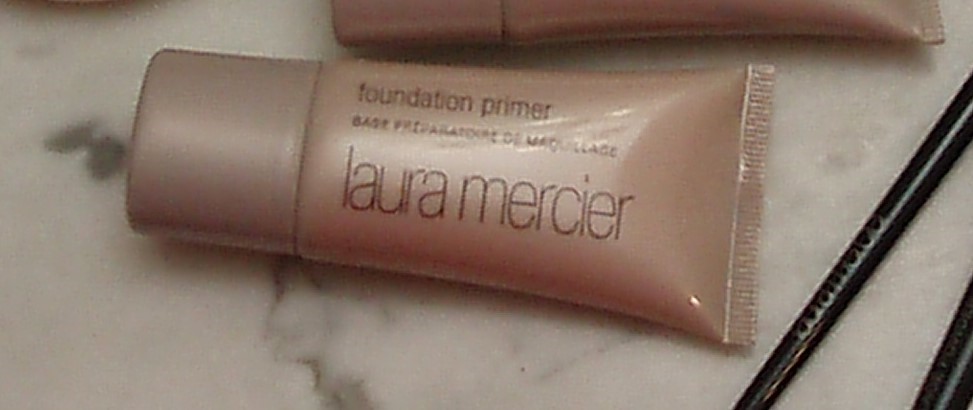
Is lip primer a real product category or a way to sell a second step to people who already own a lipstick?
I tested four primers against bare lips over two weeks, with the same three lipsticks, and timed each result.
The answer is more interesting than yes or no, because two of the four made things worse.
Primer is one of the few products that can actively reduce wear time, and almost nobody says so.
Here is what the numbers looked like and which type of primer earned its place.
If you own one and it disappointed you, you may simply have bought the wrong family.
What a lip primer is meant to do
There are three families: a wax base that smooths the lip surface, a silicone base that fills lines, and a tacky base that grips the lipstick.
Each works differently and suits different formulas.
The smoothing type helps mattes look even.
The gripping type helps long-wear liquids hold.
The silicone type mostly exists to fill fine lines, which matters more for mature lips than for wear.
Buying the wrong family for your lipstick is the most common reason primer seems useless.
Read the texture before you read the promise.
The method
Three lipsticks, one creamy satin, one liquid matte and one traditional bullet matte.
Each was worn on bare prepped lips and then over each of the four primers, on different days.
I timed the point at which the centre thinned visibly, and the point at which the whole lip needed attention.
Photographs at hours one, three and six, in the same window.
The order of testing was randomised so that lip condition did not favour one product.
Two repeats per combination, because a single day is weather rather than data.
The whole thing took twelve days, which tells you how much I wanted an answer.
The results, in short form
With the liquid matte, the tacky primer added roughly seventy minutes to visible integrity.
With the satin, it added about forty minutes and changed the finish slightly.
With the bullet matte, it added almost nothing.
With the wax primer, the liquid matte failed about twenty minutes earlier than on bare lips.
The silicone primer made all three look more even and none of them last longer.
So the honest score is one clear win, one neutral and two losses.
That is not a category you should buy blindly.
Why a primer can reduce wear
A primer with a lot of slip creates a layer the lipstick cannot bond to.
The lipstick then sits on a moving surface and lifts as a whole rather than thinning gradually.
Wax-based primers are the worst offenders, because they melt at lip temperature.
This is why some people find that primer makes their lipstick vanish by lunchtime.
They are not imagining it and they are not applying it badly.
They bought a smooth-glide product for a long-wear formula.
Wrong family, predictable result.
The tacky primer, examined
The primer that worked had a slightly sticky texture after drying, almost unpleasant.
That tack is the mechanism: it gives the film former something to grip mechanically.
It also means you cannot press your lips together for the first minute, which feels strange.
The hold is worth the discomfort on a long day.
On a short day it is unnecessary trouble.
The products that market themselves as comfortable tend to be the ones that do not work.
Comfort and grip pull in opposite directions in this category.
What a primer does to finish
Primers flatten the lip slightly, which makes mattes look more even and satins look less glossy.
If you love the sheen of a satin, a primer will take some of it away.
That is a real cost, and it is rarely mentioned on the packaging.
Photographs show it clearly: the primed lip looks flatter in the centre.
Some people prefer that look, which is why the product survives at all.
For a photograph, a primer is often worth the lost sheen.
For an ordinary day, it may not be.
The lip balm confusion
Many products sold as primers are essentially tinted balm with a little silica.
Those behave like balm, which means they reduce wear rather than extend it.
If the primer feels comfortable and soft, it is probably in this group.
The functional ones feel slightly dry or tacky, which nobody enjoys at first.
This is the opposite of how most cosmetics are tested by consumers.
Comfort sells; grip works.
Knowing that saves money.
Primer versus liner
A dry pencil liner across the whole lip added more wear time than any primer in my tests.
It also costs less and takes the same amount of time.
If you only adopt one preparation step, make it the liner rather than the primer.
The liner leaves colour behind, which a primer does not.
And it never makes a formula fail earlier.
Primer is the second step, not the first.
Most routines have that order backwards.
Primer and dry lips
On dry, flaky lips, a smoothing primer helps by creating an even surface.
On normal lips, it does very little.
On very dry lips, a primer over flakes makes the flakes more visible, not less.
The correct treatment for dry lips is exfoliation and overnight balm, not primer.
Primer is a surface product, and a bad surface cannot be primed into a good one.
That is true of foundation as well, and it is the same principle.
Prep first, products second.
Cost per wear of a primer
A primer costs between a third and a half of a lipstick and adds about an hour of wear on the best day.
Whether that is worth it depends on how often you wear a long-wear liquid.
If you wear one twice a month, the primer will expire before you finish it.
If you wear one daily, the maths works.
That is the only calculation that matters here.
Most people buy primer for occasional use and then wonder why it was pointless.
Buy it because you need it weekly, not because it exists.
Does primer help with bleeding
Some primers claim to stop feathering, and a few genuinely do.
The ones with silica fill a little of the fine lines around the lip edge.
But a clear lip liner does the same job better and costs less.
If feathering is your problem, buy the liner.
Primer is a wear product, not a shape product.
Conflating the two is why people buy the wrong thing twice.
Read the description for the word feather and be sceptical.
What about the professional view
Most makeup artists use a liner and skip primer, unless they are shooting and need a specific surface.
That is a reasonable summary of the entire category.
On set, primer is a surface tool, not a wear tool.
At home, the liner does the work.
If a professional tells you primer is essential, ask what they use it for.
The answer is usually texture rather than duration.
Duration is the marketing story, not the working one.
When to use it anyway
If you have fine lines and want a smooth surface for photographs, the silicone primer earns its place.
If you wear a liquid matte to an event and cannot touch up, the tacky primer earns its place.
If you have dry lips in winter, a wax primer will make things worse and you should skip it.
If you wear a satin bullet daily, nothing in this category will change your life.
Specific uses, specific products.
That is how tools work.
Primer and reapplying
If you reapply during the day, a primer layer underneath complicates the second application.
New product lands on primed skin and slides rather than bonding.
People who touch up frequently do better without primer.
The product that survives the day with one application benefits from it.
Choose based on your habits rather than on the product’s reputation.
A primer is a decision about your day, not about your drawer.
Most reviews never mention this.
The one case where primer is essential
If you have deep lip lines and wear a liquid matte, primer is the only way to stop the colour pooling in them.
Pooling reads as cracks from a distance, which is worse than any wear problem.
A silicone primer fills the line and the film forms across it rather than in it.
That is a genuine problem with a genuine solution.
It is also a narrow case, not a general recommendation.
Everything else in this category is optional.
Buy it for the lines, not for the hours.
What does your primer actually do?
Test it once on half your lip and compare at hour four.
If the primed half is worse, you bought the wrong family and you can stop using it.
Which family is in your drawer right now, and which lipstick have you been blaming?