Tools and Routine
Travelling With Powder Products Without Cracking Them
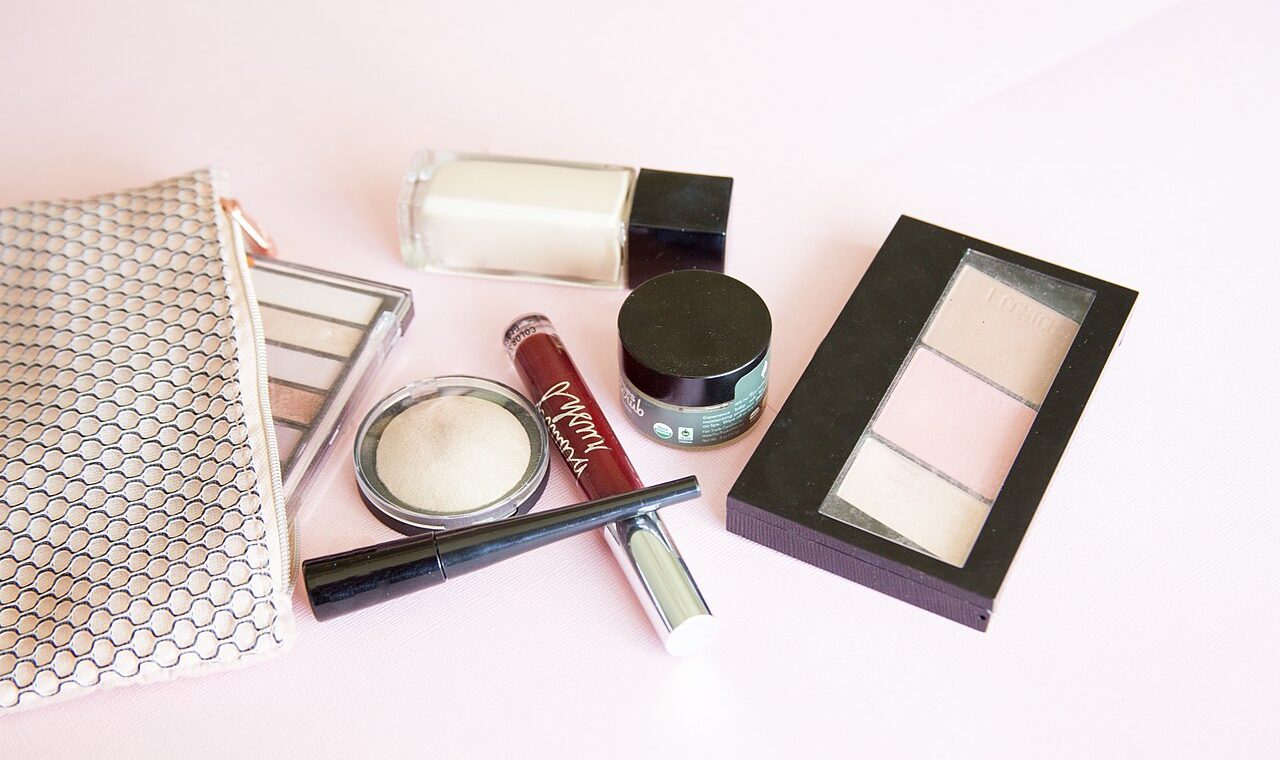
Why does pressed powder always crack in a suitcase, even when it is wrapped in clothes?
Because the pressure comes from the case flexing, not from impact.
Air pressure changes in the hold and constant vibration do the rest.
I packed four compacts four ways on four trips and recorded the damage.
Two methods survived, two failed completely.
Here is what actually protects pressed powder.
Why compacts crack
Pressed powder is pigment bound with a small amount of oil and pressed hard.
It is brittle in the way that chalk is brittle.
A suitcase wall flexes by a few millimetres under load, and the compact does not.
The powder cracks along the pressure line, usually diagonally.
Vibration adds a second stress, which is why the crack often spreads.
Both causes are mechanical and both are preventable.
Protection means absorbing flex, not just impact.
The method that works: keep it in your bag
A compact in a handbag goes in the cabin with you and never sees a hold.
It also avoids the flex of a packed suitcase.
For anything pressed and expensive, that is the only reliable method.
Most travel makeup problems are solved by carrying less and carrying it closer.
Cabin beats hold.
Every time.
The second method: cushion, not rigidity
Wrap the compact in a soft item and place it in the centre of the case.
The centre flexes least and the soft wrapping absorbs vibration.
Do not pack it against a wall or near a zip, which are the stress points.
A sock over the compact works better than a hard case.
Softness absorbs; hardness transmits.
Counterintuitive and consistent.
Why hard cases fail
A rigid case transmits flex straight into the compact.
It also adds weight, which increases the load on the contents.
Unless the case is genuinely crushproof, it does less than a sock.
Most makeup cases are not.
Rigidity creates a false sense of protection.
Soft and central beats hard and packed.
Powder in pans versus loose
Pressed pans crack; loose powder spills.
A loose powder in a sifter jar is more robust, provided the lid is taped.
Tape the lid with a strip of masking tape before packing.
That one strip prevents most spills.
Loose powder is the more travel-friendly format.
If you must travel with powder, take loose.
The tissue trick
Place a tissue or a cotton pad inside the compact before closing it.
It presses the powder gently and stops it lifting if it does crack.
It also stops the mirror rattling against the surface.
Ten seconds and almost no cost.
Small measures, good results.
This is the cheapest insurance available.
Temperature changes
Air pressure and temperature both change in a hold.
Cream products soften and can shift; powders mostly tolerate it.
What damages powders is the flex and vibration, not the temperature.
So the protection strategy differs by product type.
Creams need cool; powders need cushioning.
Know which you are packing.
Repairing a cracked powder
Smooth the surface with a tissue pressed flat, and use it as it is.
Or crush it fully, add a drop of alcohol, press it back and leave it to dry.
The alcohol method works and leaves a slightly different texture.
It is better than throwing the product away.
Repair is reasonable if the shade is a favourite.
But prevention is easier.
What to decant
Decanting foundation and cream into small pots halves the risk and the weight.
Label them, since unidentified cream in a pot is useless.
Decant only what you will use on the trip.
A two week trip needs about ten millilitres of foundation.
Decanting prevents loss and saves space.
Small containers, small risks.
Brushes in transit
Brushes bend and shed if pressed, so keep them in a roll or a tube.
A brush that has lost its shape applies unevenly afterwards.
Do not pack brushes loose with compacts.
Bristles are the most fragile part of the kit.
Protect the shape.
Shape decides performance.
The liquids bag
Anything liquid goes in the clear bag, sealed and upright.
Double bag anything that could leak, especially oils and micellar water.
A leaked bottle can destroy a whole kit in an hour.
That risk is bigger than any cracking concern.
Prioritise the leak risk.
Containment first.
What to leave at home
Anything you use once a month, anything heavy, anything glass.
A three product face is enough for a week away.
Travel is the best test of what you actually use.
Pack what you wore last week, not what you might wear.
That rule halves the bag.
Honesty about habits saves weight.
Reassembling at the destination
Check every compact on arrival, before you need it.
A crack found in the hotel room is a minor annoyance; one found at an event is a problem.
Do the check as you unpack.
It takes one minute.
Timing matters as much as prevention.
Does a pressed powder travel at all
Yes, if it goes in a bag with you and is cushioned.
The failures come from checked luggage and hard cases.
Change those two things and the problem largely disappears.
It is not a fragile product; it is a badly packed one.
Pack better and stop replacing compacts.
Method again.
What about the mirror
A compact mirror is glass and cracks more easily than the powder.
Wrap the whole compact, not just the pan.
A cracked mirror is a cut waiting to happen.
Check for glass splinters before using the powder after a drop.
Safety matters more than the product.
Inspect before use.
Packing a brush roll
A roll holds shape and protects bristles better than a bag.
Roll it loosely so the bristles are not compressed.
Compressed bristles set in the wrong direction and never fully recover.
That is why a brush can feel different after a trip.
Shape memory is real.
Store it loose.
What about solid shampoo bars for brushes
A solid brush soap travels without leaking and cleans well.
It also doubles as a hand soap in an emergency.
One item, two uses, no liquid allowance.
That is efficient packing.
Multi-use items earn their space.
Pack by function, not by category.
Do you need the full kit
No. Three products and two brushes cover a week.
Add one lipstick and one mascara and the routine is complete.
Anything beyond that is a preference.
Preferences are fine if they fit.
Fit is the constraint.
Pack to the bag, not to the drawer.
Cream products in heat
A cream foundation in a hot car will separate within an hour.
Carry creams in the cabin and keep them out of the sun.
A cool bag helps on long journeys.
Separation is usually permanent.
Temperature is the main risk for creams.
Keep them close and cool.
Decanting labels
Write the product name and shade on every small pot.
Unlabelled cream is indistinguishable from another cream.
A strip of tape and a pen is enough.
That five second habit prevents a wasted morning.
Labelling is the cheapest organisation tool.
Do it as you decant.
Repacking at the end of a trip
Wipe every product before it goes back in the bag.
Residue attracts dust and makes cases sticky.
A tissue and ten seconds per item.
The kit stays usable for years that way.
End-of-trip care is as important as packing.
Close the loop properly.
The one item worth buying for travel
A small, soft, zip pouch that holds everything and squashes flat.
It protects without adding weight.
It also doubles as a laundry bag in an emergency.
Simple and useful.
Buy the bag, not the gadget.
Containment solves most problems.
What breaks most often
Compacts, then glass bottles, then pencil tips.
All three are solved by cushioning and containment.
Nothing needs a specialist product.
A sock, a tissue and a zip bag cover the whole list.
Improvisation works here.
Household items are enough.
Checking in versus carrying on
Carry on if you can. The bag is handled less and stays with you.
Checked luggage is where most damage happens.
If you must check, pack the fragile items in the centre, cushioned, inside a soft bag.
That is the same advice as before, applied again.
Methods repeat because they work.
Use the same method every time.
How has your kit survived so far
Look at the compacts you own and see whether they are cracked now.
If they are, the storage at home is the same problem as the packing.
What is the one product you keep replacing?