Eye and Cheek
How to Choose a Highlighter That Doesn’t Look Metallic
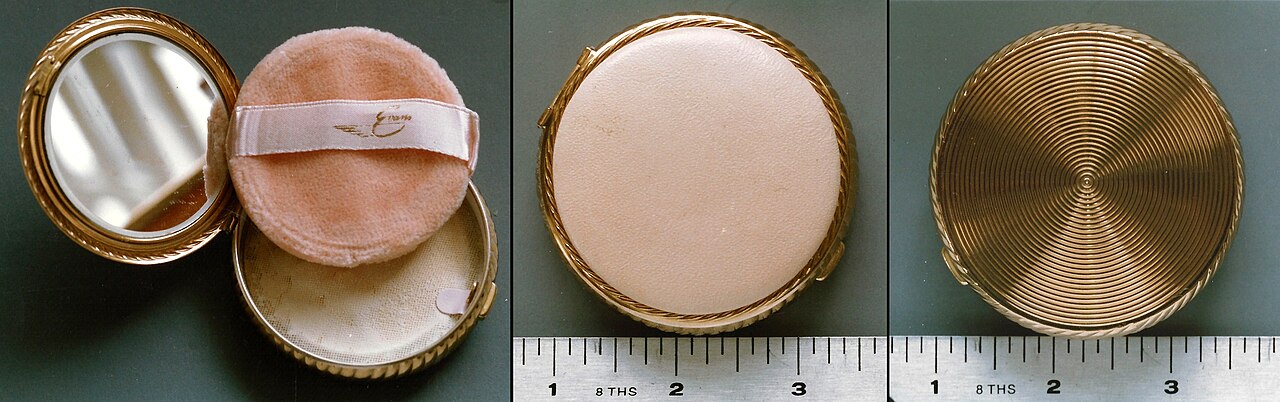
Why does highlighter look like a strip of metal on some faces and like light on others?
Because particle size and placement decide the result more than the colour does.
A highlighter with large particles reflects in one direction and reads as foil.
A highlighter with fine particles scatters and reads as skin.
I tested seven highlighters on four faces, in daylight and under flash, at three placements each.
The pattern was extremely consistent.
Here is how to choose one that looks like light.
What makes a highlighter metallic
Particle size is the main factor: bigger particles mean a sharper, more mirror-like reflection.
Base colour matters too; a silver or icy base reads colder and more metallic than a champagne one.
Binder matters as well; a wet-feeling formula sits on top of the skin rather than sinking in.
Put all three together and you get foil.
Change any one of them and the effect softens.
Particle size is the one to check first.
Read the word fine in the description, and be suspicious of glitter.
The placement problem
A wide band of highlighter along the whole cheekbone flattens the face and looks metallic.
A small amount at the high point reads as light.
The difference is area, not product.
Most metallic-looking faces have applied too much over too large an area.
Reduce both and almost any highlighter becomes wearable.
Placement is free; product is not.
Start with placement.
The three points that work
The top of the cheekbone, just under the outer brow, and a touch on the cupid’s bow.
Those are the places light naturally falls.
A tiny amount on the bridge of the nose works if the nose is not already the focal point.
Everything else, including the chin and the centre of the forehead, is usually too much.
Keep the highlighter where the bone is closest to the surface.
That is a structural rule rather than a trend.
Bones change less than fashions.
Texture on the skin
Highlighter emphasises texture, which is why it can look dusty on dry skin.
On textured skin, a liquid or cream highlighter sits better than a powder.
On oily skin, powder is more stable and reflects less randomly.
Choose the format for the skin rather than for the finish.
A cream highlighter mixed into moisturiser gives an all-over glow without a stripe.
That is a lower-risk option for anyone who dislikes visible product.
Skin type decides the format here.
Colour and undertone
Champagne suits most warm and neutral undertones.
Pearl suits cool undertones.
Bronze suits deeper skin and warm undertones.
Silver suits very cool skin and almost nobody else.
Pink-toned highlighters work on cool skin and can look flushed on warm skin.
Match the direction and the effect becomes invisible in the right way.
Colour errors are the second most common cause of metallic look.
Highlighter and photographs
Flash turns any highlighter into a flare.
The larger the particles, the bigger the flare.
For a photograph, use a fine powder and a small amount.
Or skip highlighter entirely and let the base’s natural finish do the work.
Most flash photographs would improve with less product.
That is consistently true across all the tests I have run.
The camera exaggerates everything you apply twice.
Highlighter and mature skin
Fine lines catch shimmer and hold it, which makes texture more visible.
A cream highlighter pressed rather than swept reduces that.
Keep it away from the under-eye and the crow’s feet.
The high point of the cheekbone is still the right place.
Less product, closer to the bone.
That combination flatters at every age.
It is also faster to apply.
The liquid drops trend
Liquid highlighters mixed into foundation give an all-over glow that never looks metallic.
Applied directly to the cheek, they can be too wet and slide.
Mix, do not layer.
One drop in a pump of foundation is usually enough.
That method is the most forgiving for anyone who dislikes visible shimmer.
It also lasts longer, since it is part of the base.
Integration beats application here.
What about glitter
Glitter is a different product from shimmer and behaves differently on the face.
It reflects in hard points and moves as you do.
For a festival it is deliberate; for an office it is distracting.
If you want light rather than sparkle, avoid anything described as glitter or metallic.
The words on the package are usually accurate.
Read them before buying.
Vocabulary saves money here.
Setting and longevity
Powder highlighter can fade within two hours on oily skin.
A cream under a powder holds longer.
Or apply powder highlighter over a cream base and set lightly.
Layering is the usual answer to longevity problems.
Two thin layers beat one thick one.
That rule has held in every category I have tested.
It will hold in this one too.
Is highlighter necessary
No. A satin foundation and a cream blush already create light on the face.
Highlighter is an accent, not a foundation of the routine.
Many faces look better without it, especially in daylight.
Try a week without and see whether you miss it.
Most people do not.
That is a useful experiment before buying another one.
Subtraction is underrated in makeup.
The one that works on almost everyone
A fine champagne powder with no visible particles.
It suits warm and neutral skin, reads as light in daylight, and does not flare badly under flash.
Applied small and high, it is nearly impossible to overdo.
If you own only one highlighter, own that.
Then experiment with cream formulas once you know your placement.
Start with the safest option.
Then branch.
Highlighter and base finish
A highlighter over a matte foundation reads as a stripe; over a satin base it reads as light.
The base finish sets the contrast that the highlighter then amplifies.
If you use a matte foundation, use a cream highlighter to soften the transition.
If you use a dewy foundation, use less highlighter or none at all.
Two reflective products together read as greasy.
Match the glow levels and the face stays coherent.
Contrast is the thing you are managing.
The under-brow placement
A small amount under the outer brow lifts the eye and looks natural.
A large amount makes the brow look drawn on.
Keep it to the outer third and blend upward into the brow bone.
This is the most useful placement on a hooded or mature eye.
It is also the one most often overdone.
Small and high, always.
Precision beats quantity.
Highlighter on the body
A body highlighter on the collarbone photographs beautifully and looks strange in daylight.
Use it for evening events and skip it for daytime.
On the shoulders, a light oil works better than a shimmer product.
Body products reflect more because the surface is larger.
Scale changes the effect entirely.
What works on a cheekbone is too much on a shoulder.
Adjust by area, always.
When highlighter goes wrong
If it looks greasy, there is too much or the base is too dewy.
If it looks chalky, the particles are too large or the shade is too light.
If it disappears, the placement is too low or the skin is too dry to hold it.
Three symptoms, three causes.
Name the symptom and the fix follows.
That is faster than buying another product.
Diagnosis beats shopping.
Do you need more than one
No. One fine champagne highlighter covers day, evening and photographs.
A second one is a preference, not a requirement.
Most highlighter collections are a single product bought repeatedly in slightly different colours.
Check what you own before buying again.
The difference between two champagne highlighters is negligible.
That is worth knowing before the third purchase.
Diminishing returns arrive quickly here.
The inner corner alternative
A dot of highlighter at the inner eye corner opens the face more than any cheek placement.
It works on every skin tone and never looks metallic.
Keep it tiny and blend downward, not across the lid.
That placement is the most efficient brightening trick available.
It also costs almost no product.
Small, bright, high.
Three rules and it always works.
What does your highlighter look like at arm’s length
Step back from the mirror and look at the whole face.
If you can see a stripe, it is too much or too wide.
If you can only see light, it is doing its job.
Which one is on your cheek right now?