Eye and Cheek
Making a Warm Palette Work on Cool Skin
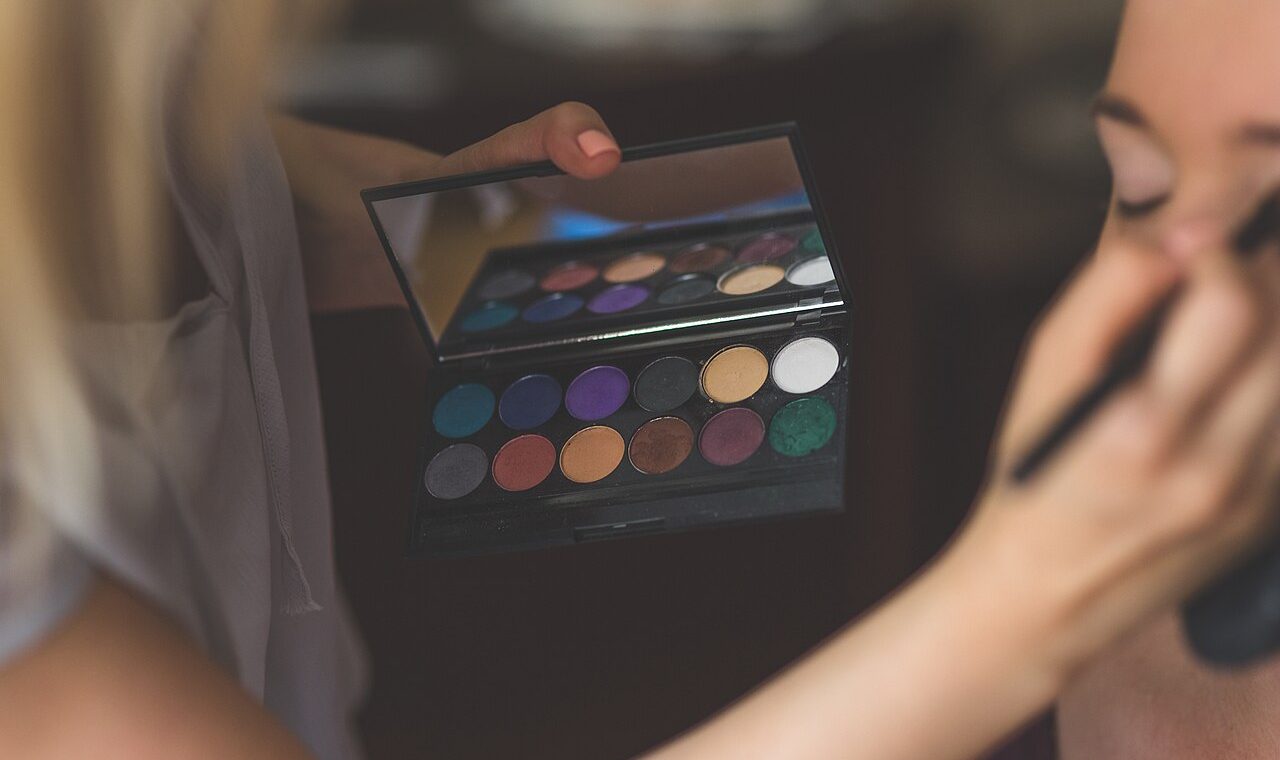
Can cool skin wear a warm palette, or is that a combination that always looks slightly wrong?
It can work, and the adjustment is about placement and contrast rather than about the colours themselves.
I tested a warm palette on three cool-skinned faces over three weeks, using four different approaches.
One approach worked consistently; two looked like a mistake.
Here is what changes when warm colour meets cool skin.
What happens when warm meets cool
Warm shadow on cool skin reads as a separate object rather than as part of the face.
That is simultaneous contrast: the skin pulls the colour warmer and the colour pulls the skin cooler.
The result can look either striking or slightly ill, depending on where it sits.
Placed close to the eye, it reads deliberate; placed wide, it reads like a rash.
Distance from the eye is the variable nobody discusses.
Proximity changes the reading entirely.
That is the first thing to adjust.
Approach one: keep it small
A small amount of warm colour in the crease, blended well, works on cool skin.
A wide wash of the same colour does not.
Keep warm shades to a third of the lid and blend the edge into a neutral.
The eye then reads warm as an accent rather than as a base.
Accents are always easier to carry than bases.
Think of warm as a spice, not a sauce.
Quantity is the main control.
Approach two: add a cool anchor
Pair the warm shade with a cool brown or a taupe in the crease.
The cool anchor makes the warm colour look intentional rather than accidental.
It also gives the eye structure, which cool skin needs with warm colour.
Without the anchor, warm shadow floats.
With it, the palette reads as a considered combination.
Pairing solves most temperature conflicts.
Never wear warm alone on cool skin.
Approach three: change the finish
Warm shades in a matte finish read flatter and more foreign on cool skin.
Satin and shimmer versions reflect light and integrate better.
That is because reflection picks up the surrounding skin tone.
A warm shimmer reads warmer and softer than a warm matte.
Finish is a temperature tool.
Most people adjust colour and ignore finish.
Finish is easier to change.
Approach four: warm the rest of the face
If the palette is warm, warm the cheeks and lips slightly to match.
A cool blush with a warm eye splits the face into two decisions.
A neutral-warm blush brings the whole face into one temperature.
That coherence is what makes an unusual palette look deliberate.
Clashing temperatures always read as an error.
Coordination beats correctness.
One direction, applied consistently.
Which warm shades are easiest
Bronze, warm brown, soft copper and muted terracotta are the easiest.
Bright orange, yellow-gold and coral are the hardest.
Saturation again, not temperature.
A muted warm is close enough to neutral to work on most skin.
A saturated warm is a statement that requires commitment.
Start muted, then increase if you like the result.
Saturation is the dial to turn.
The eyeliner question
A warm brown liner integrates a warm palette on cool skin better than black.
Black creates a hard edge that separates the warm colour from the face.
A bronze or a soft brown softens the boundary.
That boundary is where temperature clashes show first.
Soften it and the whole eye reads better.
Liner is a temperature decision too.
Most people never consider it.
Warm palettes and cool hair
Cool hair, ash blonde or black-brown, makes warm shadow read warmer.
Warm hair makes the same shadow read neutral.
That is why a palette can look different after a colour appointment.
Adjust the intensity rather than replacing the palette.
Hair is the largest colour area on the head.
It sets the reference for everything else.
Change hair, reassess makeup.
Warm palettes and cool eyes
Blue and grey eyes look extraordinary with warm shadow, because the contrast is complementary.
That is the one case where warm on cool skin always works.
Brown eyes look better with warm shadow when it is muted rather than bright.
Green eyes sit in between and handle both.
Eye colour changes the rule.
Skin temperature is not the only variable.
Look at the eye before deciding.
What to do with the palette you regret
Use the warm shades as crease accents rather than bases.
Use the lighter warm shades as a wash with a cool liner.
Use the darkest warm shade as a liner itself, smudged.
Almost every warm palette has a use on cool skin.
It just is not the use the palette was designed for.
Reassignment is cheaper than replacement.
Look at what a shade can do rather than what it was sold as.
Cool palettes on warm skin, in reverse
The same rules apply in the other direction.
Cool shadow on warm skin needs a smaller area, a warm anchor and a coordinated cheek.
The principle is symmetry, not exception.
Temperature conflicts are managed the same way regardless of direction.
Once you know the method, both directions work.
Method transfers; products do not.
That is why method is worth learning.
The photograph test
Photograph the eye in daylight and look at whether the shadow reads as part of the face.
If it looks stuck on, the area is too large or the anchor is missing.
If it looks integrated, the balance is right.
That judgement is faster than any theory.
Trust the photograph over the mirror.
The camera is less forgiving and more truthful.
Photograph, adjust, repeat once.
Does it matter at all
Honestly, less than the internet suggests.
Most people can wear most colours if the placement is considered.
Temperature rules are useful for large areas and for base products.
For a small accent on the eye, they matter far less.
Experiment before you accept a restriction.
Restrictions are usually someone else’s preference.
Test it yourself.
Warm palettes and contact lenses
Coloured lenses change the reference point for the whole eye.
Warm lenses on cool skin make warm shadow read more natural.
Cool lenses do the opposite.
If you wear lenses, match the palette to the lens rather than to the skin.
The lens is closer to the makeup than the skin is.
Proximity decides the reading.
That is the same principle as placement.
Warm palettes in winter light
Winter light is cooler, which makes warm shadow read warmer still.
Reduce the intensity in winter rather than abandoning the palette.
A muted bronze in January reads like a bright copper in July.
Seasonal adjustment applies to eye colour as much as to base.
Light is the variable that changes most.
Adjust by season, not by mood.
The palette can stay the same.
Building a mixed palette
The most useful eye palette is neither warm nor cool but mixed.
Two warm shades, two cool, two neutrals cover almost every look.
That combination works on any skin temperature and travels well.
Most commercial palettes lean one way, which is why so many shades go unused.
Buy singles instead, or use two palettes together.
Mixed beats matched in practice.
Flexibility is the goal.
When the palette simply does not work
If every shade in a warm palette looks wrong, the palette is probably too saturated.
That is a saturation problem rather than a temperature problem.
Look for a muted warm palette, which is much easier to wear.
Or use the shades as accents only.
Most failed palettes are too bright rather than too warm.
Diagnose before replacing.
The label is usually less accurate than the swatch.
One look that always works
A muted warm brown in the crease, a cool taupe on the lid, a soft brown liner.
That combination suits cool skin, warm palettes and almost every eye colour.
It is also fast and hard to overdo.
If you need a default, use that one.
Defaults save decisions in the morning.
Everyone needs one reliable look.
Build it and stop improvising.
What about warm blush with warm shadow
A matching warm blush pulls the whole face warmer and can look sallow.
Keep the cheek neutral and let the eye carry the warmth.
One warm area per face is the safer rule.
Two warm areas compete and both look wrong.
Choose where the warmth lives.
One decision per face.
What warm shade have you been avoiding?
Try it small, with a cool anchor and a coordinated cheek.
You may find the palette was never the problem.
Which shade is going to get a second chance?