Eye and Cheek
Blush Shades That Suit Olive Skin
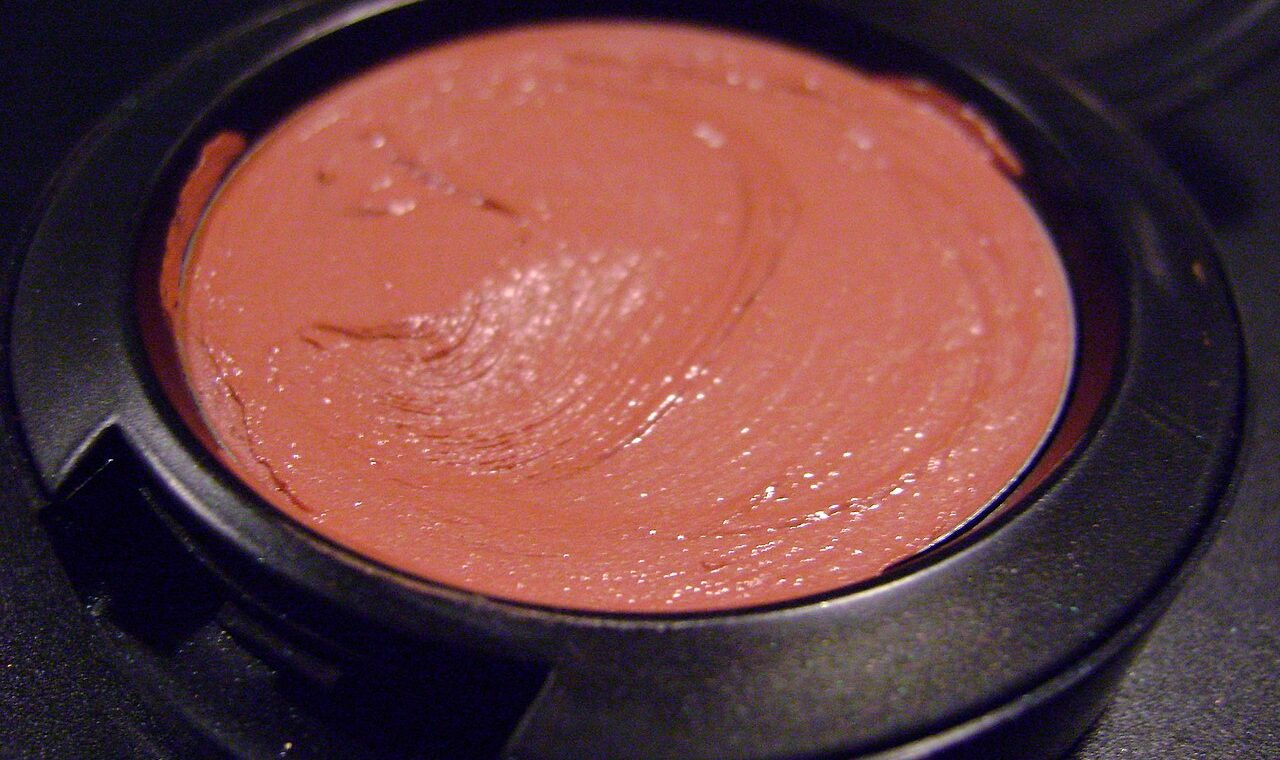
Why does every pink blush turn orange or ashy on olive skin within an hour?
Because most blushes are built on either a pink or a peach base, and olive skin neutralises both in different ways.
The result is a cheek that looks flushed in the wrong colour rather than warmed.
I tested nine blushes on three olive faces over a month, in powder and cream.
Four shades worked on all three; five failed on at least two.
Here is what separates them.
What olive does to blush
Olive skin carries green, which is the complement of red.
A red-based blush therefore loses intensity and can read muddy.
A yellow-based blush merges with the skin and reads sallow.
The shades that work sit between: muted rose, dusty terracotta, soft brick.
They have enough structure to show and enough grey to avoid shouting.
Saturation is the variable that decides success here.
Lower it and most shades become wearable.
The four that worked
Dusty rose, muted terracotta, soft brick and a brownish mauve.
All four have reduced saturation and visible brown in the base.
All four read as health rather than as colour on all three faces.
They also survived the four-hour mark without turning orange.
That combination is what makes a blush useful rather than decorative.
If you only buy one, buy the dusty rose.
It is the most forgiving of the four.
Why bright pink fails
Bright pink on olive skin reads artificial almost immediately.
The green in the skin mutes the pink, and the muted result looks like a bruise rather than a flush.
It also photographs badly, separating from the skin tone in daylight.
People often respond by applying more, which makes it worse.
More saturation does not fix a saturation problem.
Desaturate the shade instead.
That is the whole solution.
Why peach fails
Peach adds yellow to a face that already reads yellow-green.
The cheek then looks sallow and the whole face looks tired.
Warm olive can just about carry a muted peach in summer, when the skin is warmer.
Cool olive cannot carry it at all.
If you love peach, choose the version with more brown in it.
Terracotta is peach that works on olive skin.
Same family, different saturation.
The difference between warm and cool olive
Warm olive suits terracotta, brick and warm brown-rose.
Cool olive suits mauve, dusty rose and berry-muted shades.
Both should avoid saturated pink and saturated peach.
That is the shared rule; the direction is the difference.
Test which one you are before choosing a shade.
The test is the same one used for foundation.
One answer, two palettes.
Powder versus cream on olive skin
Cream blush shows up better, because pigment density matters more than sheen.
Powder can look chalky on olive skin, especially in winter when the surface is drier.
A cream applied with fingers melts into the skin and reads as a flush.
A powder applied with a brush sits on top and reads as colour.
For olive skin, the cream is usually more convincing.
If you prefer powder, choose a finely milled one.
Texture decides whether the colour looks like skin.
Placement on olive skin
High on the cheekbone, angled toward the temple, works best.
Low placement drags the face and emphasises any sallowness.
The apple placement can work if the shade is muted enough.
Keep the centre of the cheek clear, since that is where sallowness shows most.
Blend upward rather than downward.
Direction lifts the face; downward drags it.
Placement is half the result.
Blush and bronzer together
On olive skin, bronzer should be neutral or taupe rather than golden.
Golden bronzer plus warm blush produces an orange face.
Neutral bronzer plus muted blush produces a face with structure.
Keep the bronzer at the perimeter and the blush slightly higher.
The two should form one diagonal.
If they look like two patches, you stopped blending too early.
Blend the seam and the whole face reads better.
The lipstick pairing
Olive skin looks best with lip colours in the same saturation band as the blush.
A muted blush with a bright lip splits the face into two arguments.
Muted blush with a muted lip reads as one decision.
If you want a bright lip, use less blush and keep it very close to the skin tone.
Balance again, not colour.
Most mismatches are saturation mismatches.
Match the saturation and the colours take care of themselves.
What about highlighter
Gold highlighter on olive skin reads yellow and can look greasy.
A champagne or a soft bronze works better.
Cool olive does well with a pearly neutral rather than a gold.
Keep highlighter small and high, at the top of the cheekbone.
A wide band of highlighter flattens the face.
Small placement reads as light rather than product.
Less highlighter, better result.
How to test a blush in the shop
Swatch on the pad of a finger, not the wrist, and look in daylight.
Wait five minutes before judging, because powder oxidises.
If the shade goes warmer at the edge, it will go orange on your cheek.
If it stays the same colour, it is stable.
Stability matters as much as the initial shade.
Most people test the first minute and buy the wrong thing.
Five minutes is the difference.
What to do with a blush that turned orange
Layer a cool-toned setting powder over it to mute the warmth.
Or mix it with a mauve blush on the back of your hand.
Or use it as a bronzer at the perimeter instead of on the cheek.
Warm blushes make decent bronzers on olive skin.
That is a legitimate second use rather than a compromise.
Reclassification is cheaper than replacement.
Look at what the product is good at rather than what it failed.
Does blush even suit everyone
Some faces look better with bronzer and no blush at all.
That is a legitimate choice, especially on olive skin where the natural flush is less visible.
If blush always looks like product, skip it and warm the perimeter instead.
Nobody needs every category.
Routines should be built from what works, not from what exists.
Audit your own cheek and decide.
The answer is allowed to be none.
Photographs and olive skin
Cameras tend to flatten olive skin toward a single warm tone.
A muted blush helps restore some dimension without adding colour.
A saturated one adds a patch that the camera exaggerates.
For photographs, go a step more muted than feels right in the mirror.
That is the opposite of the usual advice, which assumes fair skin.
Depth and undertone change the rule.
Photograph first, adjust second.
Blush and blush brushes
A dense brush deposits a patch; a fluffy one distributes.
On olive skin, distribution matters more, because a patch reads as a bruise.
Use a fluffy brush and tap off the excess before it touches your cheek.
Build in two passes rather than one.
Most blush failures are brush failures.
The tool is doing more work than the shade.
Buy the brush before the third blush.
Blush on a bare face
Olive skin with no base can look uneven, so blush placement has to be soft.
Cream blush works better on bare skin than powder, because it melts rather than sits.
Use two dots and blend immediately.
Concentrate the colour on the bone rather than the cheek.
Bare skin shows a hard edge more than a base does.
Softer placement, smaller amount.
Bare skin rewards restraint.
How blush ages through the day
Blush oxidises, which on olive skin usually means it warms and darkens.
A sheer layer that warms is invisible; a heavy one becomes a patch by four.
That is another argument for thin application.
Check your cheek at three in the afternoon before deciding a shade does not work.
The morning version and the afternoon version are different products.
Judge the one you will be seen in.
Timing is part of shade testing.
A note on cheek redness
Olive skin often has surface redness, which changes how blush reads.
Correct the redness first, then apply blush, or the two will mix into something muddy.
A green corrector used only on the cheeks solves it.
Then the blush sits on an even base.
Without that step, the blush colour is unpredictable.
Correct, then colour.
Order solves most colour problems.
Which shade has been failing you?
Look at the blush you stopped wearing and check its saturation.
If it is bright, that is the answer, and it is not your face.
What is the muted version of that shade, and have you tried it?